September 2, 2026
Murcia High Court: 30% surcharge for failure to comply with safety measures at construction site
The Murcia High Court upholds a 30% surcharge on Social Security benefits for a worker injured in a construction site accident due to the company's failure to implement required safety measures, specifically an unprotected gap in a staircase.
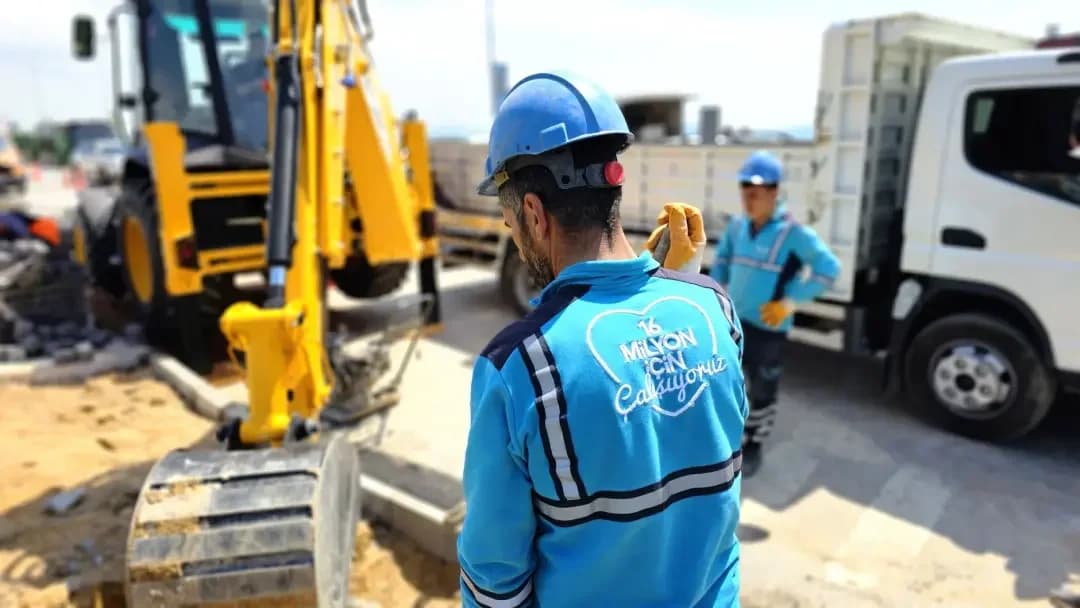
The Murcia High Court (TSJ) has confirmed, through a judgment by its Social Chamber, a 30% surcharge on the Social Security benefits received by a worker following an accident at a construction site. The court ruling supports the assessment that the company failed to comply with mandatory workplace safety measures, specifically on a staircase at the construction site where the worker fell. This case underscores the importance of occupational risk prevention and the employer's obligation to ensure safe conditions, even in the face of possible non-negligent distractions by workers.
Established facts: fall due to unprotected gap in construction site staircase
The Murcia High Court's judgment upholds the facts deemed proven in the lower court, according to which a worker suffered an accident while descending a construction site staircase carrying tools. During the descent, he lost his balance and fell through a gap between the steps and the partition wall, measuring 52 centimeters in height. The ruling states that at this point on the staircase, there was no railing or other physical elements preventing the fall, nor any specific signage warning of the risk of falling.
The Labor Inspectorate identified the unsafe area, and the National Social Security Institute (INSS) applied the 30% surcharge on the benefits arising from the accident. The company, in its appeal, argued that the accident was due to a fortuitous event or improper footing by the worker, and that the construction site had general protective measures in place.
Judicial reasoning: failure to comply with preventive obligations and causal link
The Murcia High Court's Social Chamber dismisses the company's appeal and upholds the lower court's judgment. The court considers that the modifications proposed by the company do not alter the outcome, as the risk was precisely located in the gap in the staircase where the fall occurred. The ruling emphasizes that the surcharge was based on the existence of an unsafe area on the staircase, resulting from the difference in step width, without protection or signage against the risk of falling.
The court recalls that the Occupational Risk Prevention Law establishes the employer's obligation to adopt all necessary measures to ensure effective protection of workers. It also notes that the effectiveness of preventive measures must account for distractions or non-negligent imprudence that a worker might commit. In this case, the court finds that the risk of falling through the staircase gap was evident and that the lack of safety measures was also evident, regardless of the worker's experience at the site.
The judgment concludes that there is an adequate causal link between the accident and the company's conduct in omitting the required safety measures, thereby confirming the 30% surcharge on the benefits arising from the workplace accident.
Legal consequences and court costs
As a result of dismissing the appeal, the Murcia High Court orders the company to pay the court costs, set at 800 euros for the legal fees of the opposing party's representation. The judgment does not alter the 30% surcharge on the Social Security benefits received by the injured worker, which remains in force.
This judicial ruling reaffirms the principle that the preventive obligation in occupational health and safety is not satisfied by the adoption of general measures alone; rather, it requires ensuring protection in each specific risk area of the workplace. The judgment reminds that a worker's experience does not absolve the employer of its duty of protection, and that the effectiveness of preventive measures must consider possible non-negligent distractions. For a legal assessment tailored to the specific circumstances of each case, it is advisable to consult a professional specializing in labor law and risk prevention.